
The First Opium War
From The Rise of Modern China by Immanuel Hsu

Background
I normally do a single post about an entire book.
But Immanuel C.Y. Hsu’s book The Rise of Modern China covers 500+ years of China’s history in great detail and was way too much to try and squeeze into a single post.
Instead, I will do a post on a single subject: the First Opium War.
The First Opium War (1839-1842) is fascinating to me for a few reasons:
Normally wars are fought over ideologies or for the “greater good.” This war was almost purely about economics
The economic problem was globalization and trade imbalances, something that is particularly relevant in today’s world (it also happens to deal with a trade imbalance with China…)
This “war” shows the importance of technology. Britain had steamships armed with cannons and China was fighting with sailboats and rifles
Let’s jump in.
Setting the stage
China was extremely isolated from the western world prior to the 1700s. They were the preeminent power in Asia and believed themselves to be the most powerful nation in the entire world.
They had some relations with Russia in the past but possessed an extremely limited knowledge of Europe. In fact, they often referred to the Portuguese and British as the “red haired barbarians” that occasionally came to their shores to buy things.
If these barbarians wanted to deal with China, it would be on Chinese terms.
These terms were first defined in 1757 where a single port in Canton (modern day Guangzhou) was set up.
In essence:
foreigners couldn’t have armies, women or guns
they must first register in Macao (which was run by Portugal) before being invited to Canton
foreigners could not learn Chinese or speak with the local population
they must live in their factories and not go into the town
Chinese merchants could not go into debt to foreigners
foreigners would obey Chinese law
And so on. It was very restrictive but Britain (and other European powers) accepted it at the time because they desperately wanted to trade with China.
Why did Britain want to trade with China?
To put it simply, Britain needed tea.1
During the Industrial Revolution, people moved from being farmers in rural towns to being factory workers in bigger cities. And remember, Britain was the single most industrialized place in the world.
These factory jobs were incredibly monotonous and dangerous. Often people drank beer on the job which made them sluggish and more error prone.
Around the same time, the Industrial Revolution allowed Britain to build a massive navy to create a global trading network.
This is the first era of true globalization where countries across the globe could trade with each other at scale. It’s hard to overstate how big of a change this was.
Through this new global trading network, Britain discovered tea. Caffeinated tea, to be specific.
And they realized that factory workers would be much better off if they drank tea. It kept them alert and focused. And it also stopped them from drinking beer.
Over the course of a few decades, Britain became a massive tea drinking country and started importing massive amounts of tea so it could power the Industrial Revolution.
This crucial tea came almost exclusively from China.
Why did China want to trade with Britain?
In short, they didn’t. And that was the issue.
China was (and still is) a highly self-reliant economy. They traded their goods with others but purchased very few items from abroad.
Since China didn’t want any of Britain’s goods, Britain had to bring gold and silver into China to pay for its tea.
Frequently 90 percent — and sometimes as high as 98 percent — of the East India Company’s shipment to China was gold, and only 10 percent commodities. Between 1781 and 1790, 16.4 million taels of silver flowed into China, and between 1800 and 1810, 26 million.
In other words, Britain had a decades-long trade deficit — a growing one too — to China that was draining its currency reserves.
All to keep up with the growing demand of tea back home. This might sound crazy but it’s true.
Throughout these decades, Britain kept trying to renegotiate their trade contracts with China so they could open up more of the Chinese market to sell into. But more importantly, they kept trying to find something that Chinese consumers actually wanted to buy from them so they could shrink their trade deficit.
Eventually Britain did find something Chinese consumers wanted.
Opium
China was first introduced to opium over a thousand years prior to the British by the Arabs and the Turks. Its use was very rare and purely medicinal until the the late 1600s.
For the next several decades, Portugal imported small quantities of the drug and China had some (still very limited) recreational opium use.
This all changed in 1773 when the East India Company (Britain) gained control of the Indian opium supply.2
While the East India Company technically didn’t sell the opium directly to China (it was illegal to do so), it sold it to private merchants who sailed under the East India Company’s license. Same difference.
The opium trade was measured in terms of “chests”3 and below is how many chests were imported to China each year:
1767: 1,000 chests
1800: 4,500 chests
1820: 10,000 chests
1838: 45,000 chests
In ~60 years, Britain managed to increase the demand of opium in China by 45x.
To give you a sense of scale, the trade balance between Britain and China reached an equilibrium in the 1820s and in 1826 — for the first time ever — it shifted in Britain’s favor.
All because of opium.
By 1831, ~5 million taels of silver were now leaving China to pay for its addiction.
To recap:
Britain was addicted to tea
It needed something to sell to China so it could pay for this tea addiction
It tried for decades to sell various things to the Chinese with no luck
Finally, Britain imported opium from India to sell to China
China became addicted to opium;
Trade balance “solved” (the trade balance actually tipped in Britain’s favor, slowly draining silver back out of China)
China’s response
The drain on China’s silver reserves caused an acute economic contraction and rapid currency devaluation. Additionally, having up to ten million people smoke opium daily dented its economic productivity and slowed down its economy. (It also ruined the lives of those millions who were addicted.)
After putting up with this for decades, China finally cracked down on the opium trade fiercely in 1838.
They started imprisoning (and in some cases, executing) local opium dealers. They managed to make a major dent in the importation but realized they couldn’t completely stop the trade by punishing its own citizens.
China needed to discourage British merchants from shipping it to their shores to begin with.
In May 1839, China demanded British merchants turn over all of their opium within three days.
The merchants refused and a standoff began.
Eventually, a local British official named Elliot did something devious.
He ordered all British merchants to hand over their opium to HIM and then he would hand it over to the Chinese.
This is very subtle but by shifting the opium from private British merchants to the actual British government, the British government had an excuse to get involved. Britain could now claim that China owed its government damages for the opium it stole.
After China destroyed the ~20,000 chests (almost half a year’s supply!) it confiscated, the British merchants evacuated Canton for Macao.
Shortly after, China pressured the Portuguese to kick them out and they evacuated to a small, barren island known as Hong Kong and waited for the British Navy to arrive.
The Opium War
To call this a war is a bit of a stretch.
China stood no chance against the British Navy. Britain was the most dominant military power in the world and China’s army was extremely backwards.
(Remember that 20 years prior, Napoleon’s Navy stood no chance against the British! And he had modern ships and modern guns!)
While there were a few parts of this war, it ultimately ended when Britain decided to sail north and occupy almost every major city along the Yangtze River.
Pottinger carried out his instructions meticulously. After leaving a few ships to guard Hong Kong, he moved north on August 21, 1841 … Amoy was occupied on August 26, Tinghai on October 1, and Ningpo on October 13.
After occupying the cities for the winter, they started again next summer.
Moving swiftly, the British occupied Woosung on June 16, 1842, Shanghai on June 19, and Chinkiang on July 21
These cities were captured and occupied without much resistance. The modern technology of the British Navy was simply too much.
China agreed to Britain’s peace terms and the result of the war was:
China paid Britain a ton of money (the cost of the war + the cost of the stolen opium + repayment of debts to the British merchants)
China opened new ports for Britain in Amoy, Foochow, Ningpo and Shanghai
Britain kept Hong Kong
They established fixed tariffs
A “most favored nations clause” saying that if China gave another country better terms, Britain would also get these terms4
Why wasn’t there more of a war?
The interesting context here is that China was currently under the Qing Dynasty, which was ruled by the Manchu people.
The Manchu people are a separate ethnic group from Manchuria, the very Northeast corner of China. The rest of China was >90% Han Chinese.
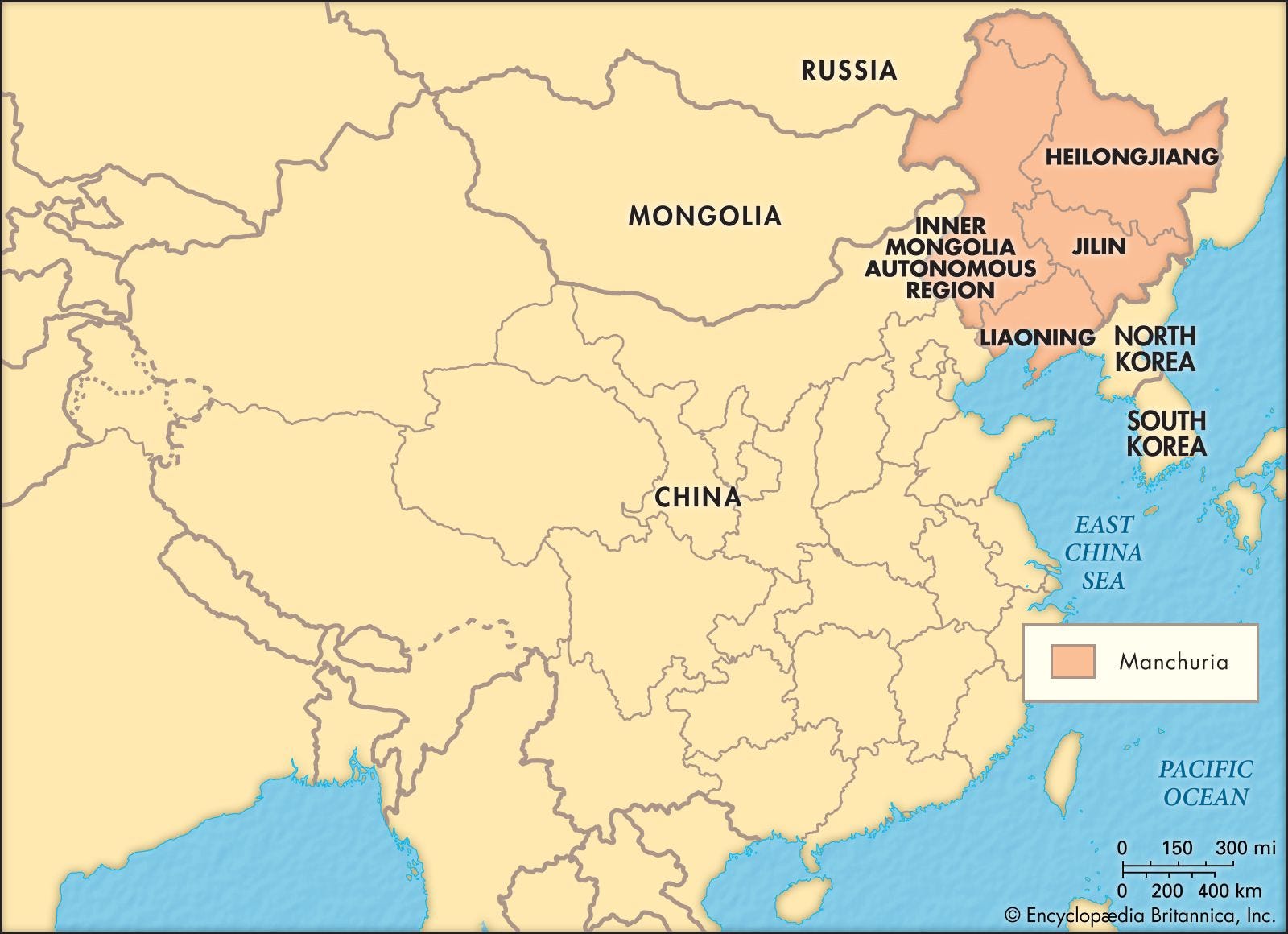
While the Manchu had historically kept to themselves, they managed to take over China from the Ming Dynasty in the mid 1600s through brilliant military and strategic moves.
Even though the Manchu had been ruling China for over a hundred years, there was a very large part of China that wanted to be ruled by Han Chinese. In fact, there had been many rebellions, coups and even civil wars during the Manchu reign leading up to this point.
So let’s just say that while the Manchu were in charge, their rule was a bit shaky.
When Britain came in and started taking over cities without much of a fight from the Qing Dynasty, the local population sensed the Manchus weren’t that strong after all.
I bring this up for a few reasons:
Britain was taking over cities in the south (Canton) all the way up to Shanghai (near where it says East China Sea on the map above). These areas were all >90% Han Chinese and they weren’t exactly going to fight to their death to protect Manchu rule.
Once the Manchu realized their armies were no match for the British and the local populations weren’t going to fight to defend their cities, they needed to save face. They negotiated quickly and would come to regret many of the things they agreed to.
Shortly after they agreed to terms with Britain, America and France wanted their own agreements. Anxious to avoid new conflicts (which they would also lose) with either country, they also agreed to quick and clumsy trade deals with them.
These three treaties all built on each other and became known as the “unequal treaties.”
The unequal treaties often mark the beginning of China’s Century of Humiliation which lasts until the end of WW2.
They also traded for silk and rhubarb. But tea was the main thing.
From Bengal, to be specific.
1 chest = 60-65kg; or about 140lbs.
This was technically formalized in the 1843 Supplementary Treaty (Treaty of the Bogue)